How to water balcony plants while keeping the floor dry
· Editorial team miaminewsdaily7.com
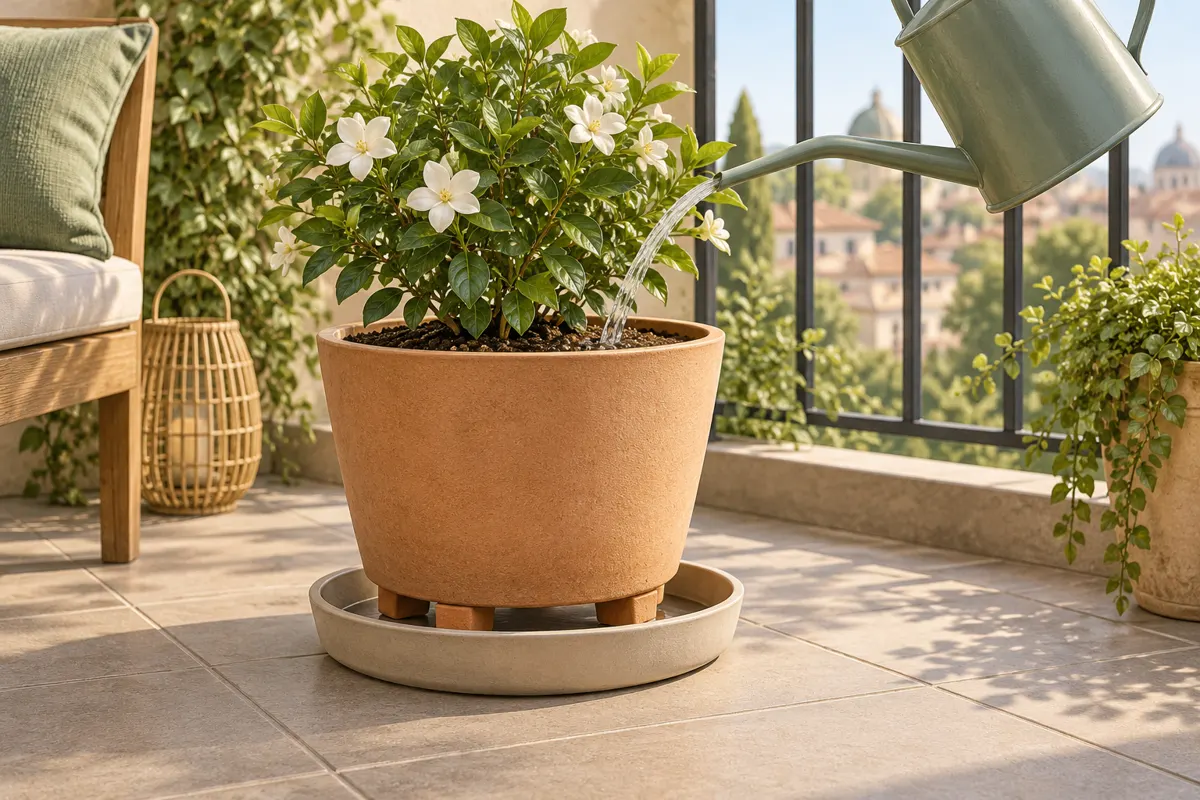
To keep the balcony floor dry, place a removable, watertight tray beneath each pot, water slowly in small amounts, and empty the collected runoff after the pot drains. Keep drainage holes open: the aim is to catch excess water, not prevent it from leaving the soil.
Set up a tray you can actually empty
Use a saucer or tray that extends beyond the pot’s base and catches water from every drainage hole. Check it for cracks before watering. A tray that barely fits beneath the pot may be difficult to remove without spilling, so consider access as well as appearance.
Our suggested setup is a watertight tray with stable pot feet inside it. The feet create a small gap beneath the pot, while the tray contains runoff. Keep the supports clear of drainage holes and check that the pot sits securely. Elevating a pot without a catch tray allows drainage but does not keep the floor dry.
- Choose a tray you can reach without stretching over a railing.
- Leave enough room to lift the pot or slide out the tray safely.
- Start each watering session with an empty tray.
- Keep a cloth nearby for accidental splashes.
Water slowly, with pauses between pours
A watering can with a narrow spout helps direct water onto the soil instead of the floor. Hold the spout close to the soil and pour gently around the plant’s base. Small amounts give you more control, but they should add up to adequate watering for that plant; a few token splashes are not the goal.
- Check whether the plant needs water, taking its moisture requirements into account.
- Confirm that the tray is empty and correctly positioned.
- Pour a small amount onto the soil, then pause to let it soak in.
- Continue slowly across the soil surface, watching for drainage beneath the pot.
- Stop pouring once the soil has been watered adequately and excess water begins draining. Let the remaining runoff collect.
Watch the tray throughout. If it approaches full, stop and empty it before continuing. Avoid using one fixed quantity for every container: watering needs depend on the plant, pot size and conditions.
Remove runoff without spilling it
Once drainage has slowed, empty the tray rather than leaving the pot standing in collected water. Check again afterward for late drips. Do not rely on evaporation to clear a full saucer, especially during damp weather.
For a small container, our suggested method is to lift the pot onto a second catch tray, carry the first tray level to a suitable disposal point, and return it empty. Avoid tipping runoff over the balcony edge. For a pot that is too heavy to lift safely, a sponge or small hand suction tool is a practical proposal for removing water from an accessible saucer.
If lifting always causes a spill, change the arrangement before the next watering. A tray that is easy to empty makes the routine more manageable than one trapped beneath a heavy planter.
Keep drainage holes open
Water coming through drainage holes is expected. Sealing those holes to stop drips can leave excess water trapped around the roots. Keep the drainage route open and catch the water outside the pot instead.
Inspect accessible holes for obstructions and make sure the pot’s base is not pressed against a surface that prevents water escaping. If a planted inner pot sits inside a decorative container without holes, check and empty that outer container too. It can hold water out of sight.
Adjust the routine after rain
A catch tray collects rain as well as watering runoff. Check exposed pots and empty their trays after rain. Feel the soil before adding more water, and follow the needs of each plant rather than watering every container together.
For plants sensitive to prolonged damp conditions, temporary shelter can help during wet weather. Keep trays accessible wherever you place them. This routine controls watering spills; it cannot keep an uncovered balcony floor dry during rainfall.