How to reduce beach-day waste with a small reusable kit
· Editorial team miaminewsdaily7.com
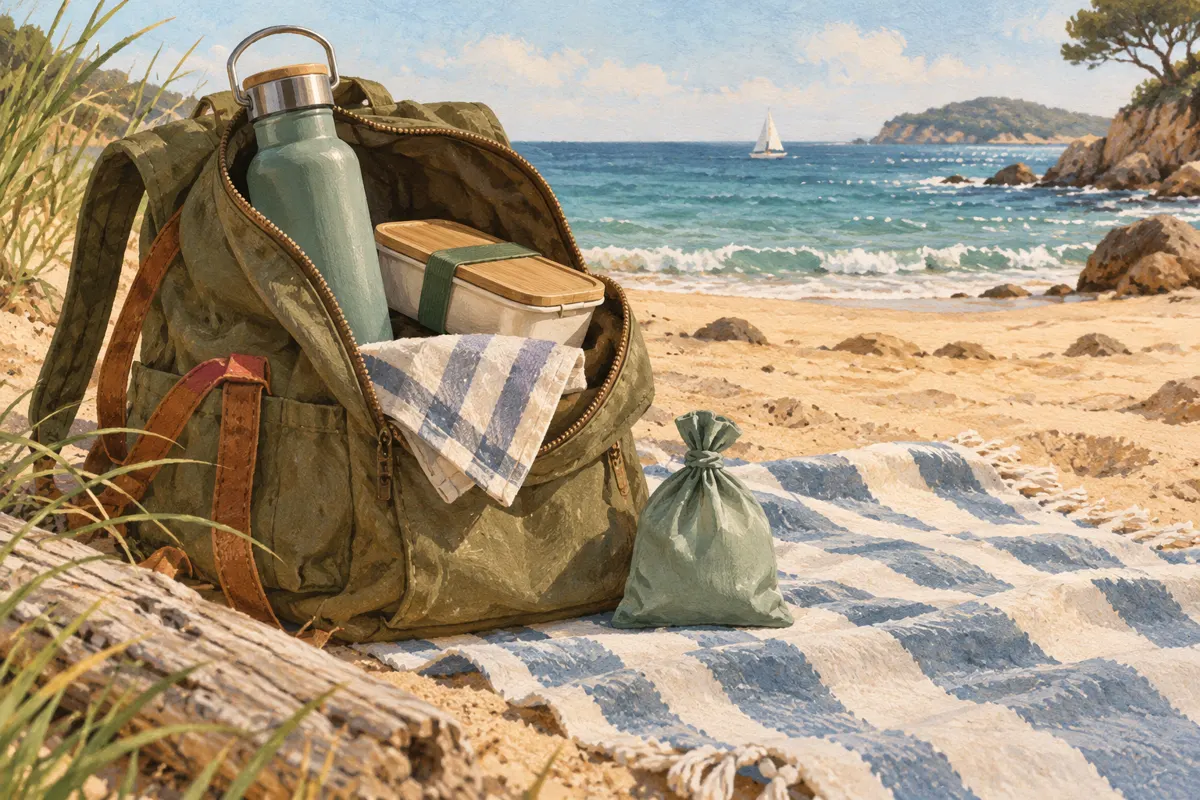
Reduce beach-day waste by packing a refillable water bottle, food in a reusable container, a cloth napkin and a bag for bringing trash home. For a trip on foot, by bike or on public transit, keep these items together in one comfortable backpack. Plan for the return journey as well as the picnic: everything you bring should have a place to go when it is empty, dirty or ready for disposal.
Build a kit that fits your everyday bag
Start with items you already own. NOAA recommends reusable bottles and food containers to reduce the waste brought to the beach. You do not need a matching set or a separate collection of beach accessories. For apartment dwellers with limited storage, ordinary lunch supplies can serve the same purpose.
Our proposed compact checklist keeps the kit small enough to carry alongside your usual beach essentials:
- A refillable bottle with a secure lid.
- One reusable food container sized for your meal or snacks.
- A cloth napkin and an ordinary fork or spoon if your food needs one.
- A closable bag for wrappers, peels and other trash.
- A backpack or sturdy tote that holds the full kit comfortably.
Before leaving, pack the bag and carry it around your apartment briefly. If it feels awkward, remove optional accessories or rearrange the contents. Keep the bottle upright and avoid loose utensils that are difficult to find among towels and clothing.
Pack food with fewer loose wrappers
Choose food that fits the container you have. A sandwich and a snack may share one box, while a meal eaten with a fork needs only one utensil. Washable containers and reusable cutlery are practical alternatives to disposable food packaging and utensils.
Pack a realistic amount for the outing. If you bring packaged food, keep the wrapper contained after opening it. Moving a snack from a disposable packet into a reusable box does not eliminate the original packaging, but it lets you dispose of that packaging at home before heading out.
- Put food into its container before leaving, rather than carrying extra serving dishes.
- Bring a utensil only when the meal requires one.
- Use the cloth napkin during lunch, then tuck it away for washing.
- Close the food container after eating so lids and leftovers stay together.
Make a water plan before you leave
Fill your reusable bottle at home. If you expect to refill it during the outing, check where drinking water is available along your route or at your destination. Do not assume every beach has a working fountain or refill station.
For a longer visit, decide whether your carrying setup can accommodate another filled bottle. Keep water accessible so you do not have to unpack the whole bag each time you want a drink. Reducing disposable bottles should be part of a workable water plan, rather than a reason to bring too little.
Give trash a secure ride home
Set aside space for waste before you reach the sand. NOAA advises taking trash home when beach bins are missing or overflowing. It also explains that wind and rain can move litter into waterways, so a loose wrapper beside a full bin is not properly contained.
Our proposed return system is simple: use a closable bag for dry trash and, once lunch is finished, use the empty food container for your own messy scraps. Keep waste separate from any food you still plan to eat. Choose a setup that closes securely and can be carried comfortably on the walk or ride home.
- Put wrappers and scraps away as soon as you finish eating.
- Use an available bin only when it has room; follow its sorting labels.
- Carry remaining waste home in your closed bag or container.
- Dispose of it according to your household trash and recycling guidance.
Check the sand, then reset the kit
Before leaving, look around your towel and under your bag for caps, wrappers, utensils and other small belongings. Count any toys or beach accessories you brought. NOAA warns that items left near the water can wash away as the tide rises.
At home, empty the waste bag, wash the bottle and food container, and launder the napkin as needed. Let everything dry before storing it together. In a small apartment, the container can hold the folded napkin and utensil between outings. If something was unnecessary or difficult to carry, adjust the kit for your next trip. A useful routine is one you can repeat without a large packing job.