How to keep a packed salad crisp until lunchtime
· Editorial team miaminewsdaily7.com
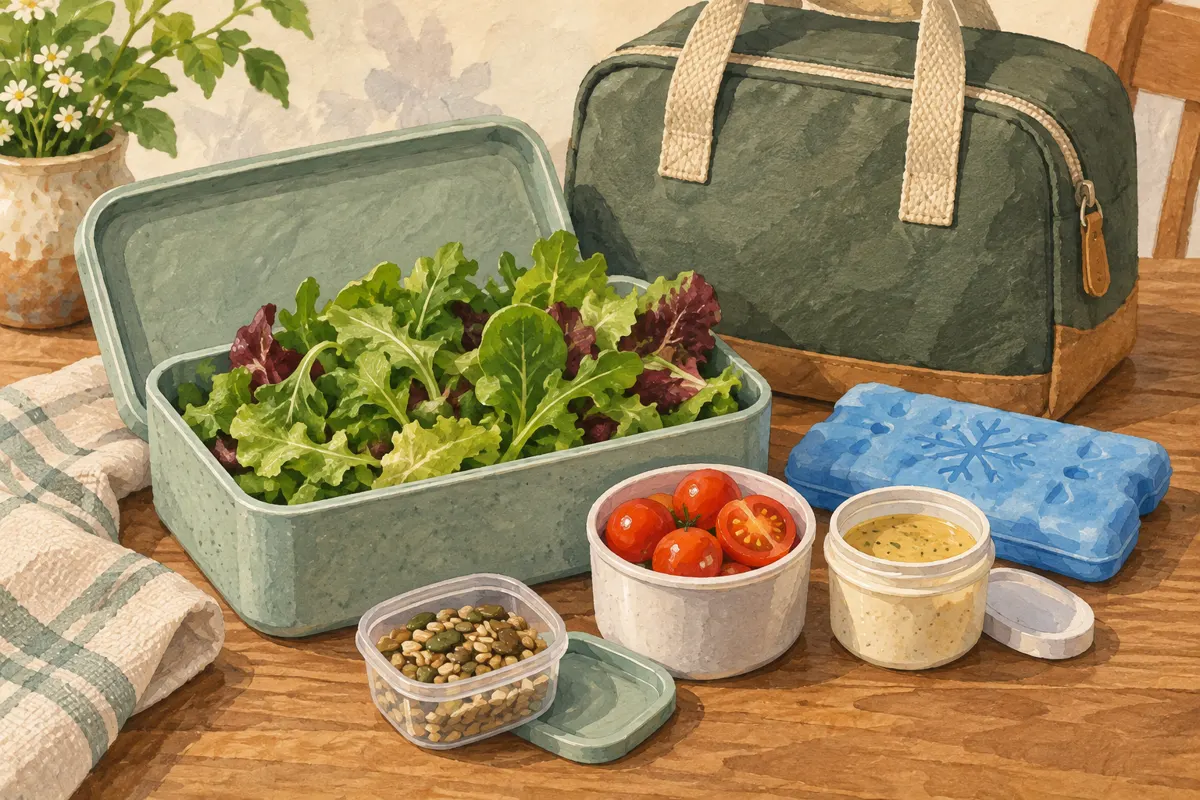
To keep a packed salad crisp until lunchtime, start with dry greens, pack dressing and juicy toppings separately, and keep the ingredients cold. Give the leaves room in the container, then combine everything just before eating. These habits help prevent a wet, compressed pile of lettuce by noon.
Start with greens that are dry and sturdy
Water left on washed leaves goes straight into your lunch container. Before packing, take time to dry the greens thoroughly, including the folds where droplets collect. A salad spinner is convenient, but a clean kitchen towel also works. The goal is leaves without visible surface water.
- Wash the greens, then let excess water drain.
- Spin them in manageable batches, or spread them on a clean towel and gently pat dry.
- Check for lingering droplets before transferring the greens to the lunch container.
For a salad packed the night before, sturdy greens such as romaine, kale or cabbage are useful choices. Delicate spring mix and butter lettuce need more careful handling. Whatever you choose, avoid pressing the leaves into a tight block to make space for toppings.
Keep dressing and juicy toppings separate
Pack dressing in a small container with a secure, leak-proof lid, and pour it on only when you are ready to eat. Keeping it separate is one of the most useful changes you can make: even well-dried greens lose their texture when they spend the morning sitting in dressing.
Treat other sources of moisture the same way. Cut tomatoes, cucumbers, citrus and brined toppings can bring liquid into contact with the leaves. Put them in a separate compartment or small lidded container. Drain excess liquid before packing, rather than carrying it along with the topping.
- Keep dressing in its own sealed cup.
- Separate juicy vegetables and fruit from the greens.
- Pack croutons, crackers, nuts and seeds in a dry compartment or container so they retain their crunch.
Pack the container without squashing the leaves
Use a container large enough for the lid to close without pushing down on the salad. A compartment tray makes separation straightforward, but an ordinary lunch box with a few small containers can do the same job. Leave enough room to toss the salad at lunchtime, or plan to transfer it to a bowl.
If everything must share one container, put substantial ingredients such as beans, grains and firm vegetables at the bottom, then add the greens on top. Keep dressing separate even with this arrangement. Layering helps keep leaves away from moisture that settles, although separate compartments provide a clearer barrier.
Suggested combination: pack romaine and shredded carrots in the main container, drained beans and chopped tomatoes in a side compartment, and dressing and seeds in separate small containers. This gives you a simple lunch that you can finish assembling when you open it.
Keep the salad cold through the morning
Start with chilled ingredients and refrigerate the packed salad until you leave. If you have a refrigerator at your destination, put lunch there when you arrive. Otherwise, carry it in an insulated lunch bag with an ice pack, away from direct sunlight and heat.
Keeping the salad cold supports both texture and food safety. Separating the dressing does not replace refrigeration, especially when your lunch includes cooked chicken, eggs or other perishable additions. Avoid treating a closed container alone as a way to keep lunch cold.
Assemble the salad just before eating
You can do the washing, drying and portioning the evening before while leaving the components separate. At lunchtime, assembly takes only a few steps. Add the crunchy extras last so they spend as little time as possible in contact with dressing.
- Open the container and add the vegetables, beans or other toppings to the greens.
- Pour on some dressing and gently toss. Add more if needed.
- Scatter croutons, nuts or seeds over the finished salad and eat promptly.